The summer staycation quietly reshaping Gulf travel habits
Every June follows a familiar pattern across the Gulf. As school holidays approach and temperatures rise, residents of the UAE, Saudi Arabia, Qatar and Bahrain begin mapping out their annual departures. Group chats fill with itineraries to Tuscany, the Côte d’Azur, London and further afield. For many, summer has long meant distance—a seasonal exit from heat in exchange for long-haul horizons.
This year, however, the rhythm feels noticeably altered. A combination of geopolitical tension involving the US, Israel and Iran, alongside persistently high fuel costs, has introduced a new layer of hesitation into travel planning. Airfares have climbed, routes remain vulnerable to disruption, and the casual logic of booking far-flung holidays has become more difficult to justify.
The result is not a cancellation of summer plans, but a recalibration of their geography. Rather than leaving the region, many residents are choosing to remain within it—redefining what a holiday means in the process.
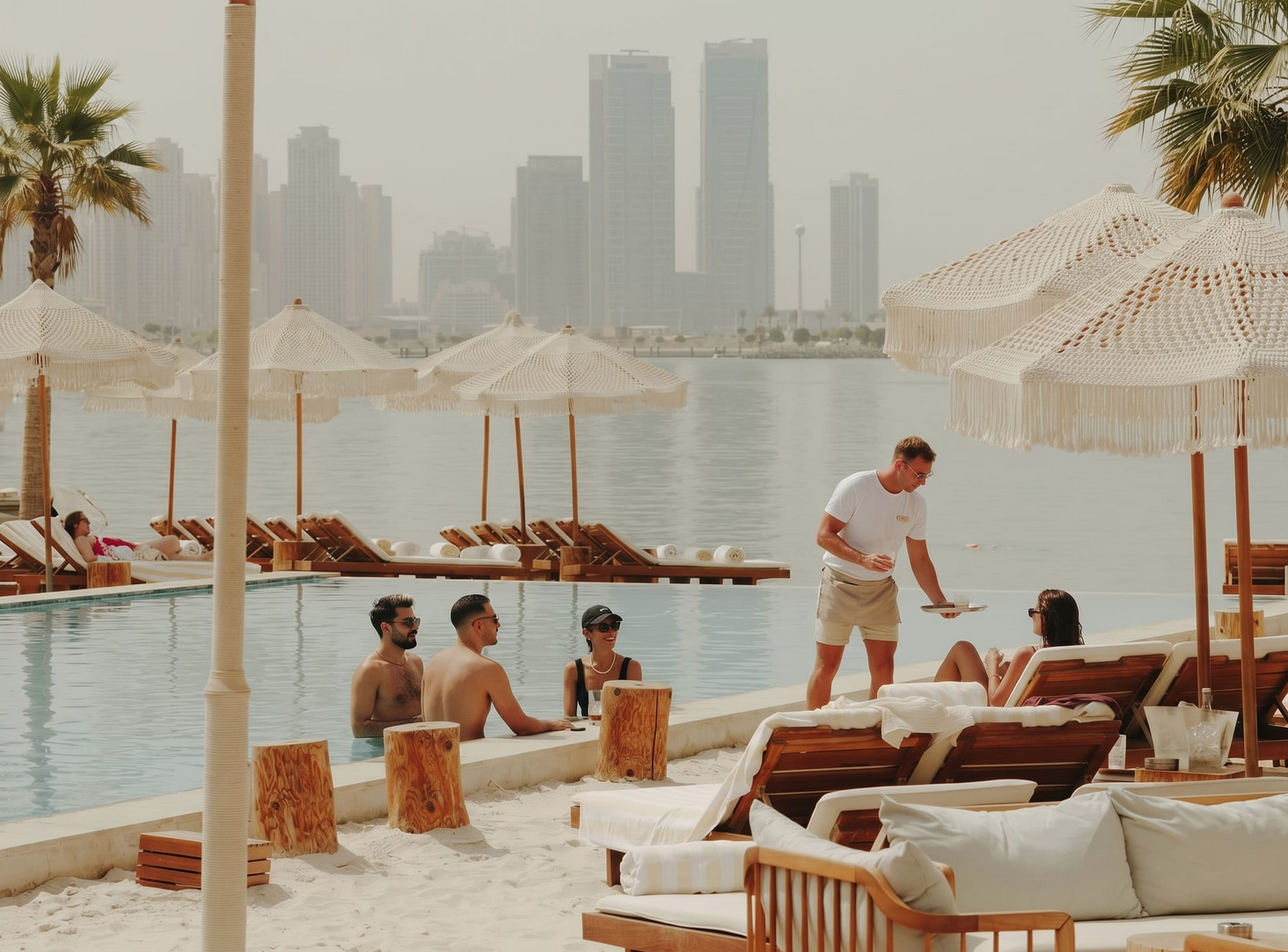
Crucially, this does not translate into staying at home. Across the Gulf, hospitality groups have responded with unusually aggressive pricing strategies. Five-star resorts that are typically reserved months in advance are now offering summer rates that would have once seemed implausible. The effect has been immediate: demand has shifted inward.
Friends who might previously have spent July in southern France or the Italian countryside are instead booking weekends in Ras Al Khaimah, short escapes to Oman, or extended stays in Dubai’s high-end resorts. The appeal is not only financial. There is also a growing preference for convenience, predictability, and shorter travel cycles in a period defined by uncertainty.
What is emerging is a quieter version of luxury travel—less defined by distance, more by access. The experience remains aspirational, but its geography has tightened. In place of long-haul ambition, a regional hospitality ecosystem is absorbing demand with surprising efficiency.
For now, the Gulf’s summer calendar is not shrinking. It is simply being redrawn closer to home.
Away from the noise.
Only the content that interests you, away from the noise and calm. Subscribe to our curated newsletter.