Pyongyang and Beijing Recalibrate as Trump-Era US Reasserts Itself
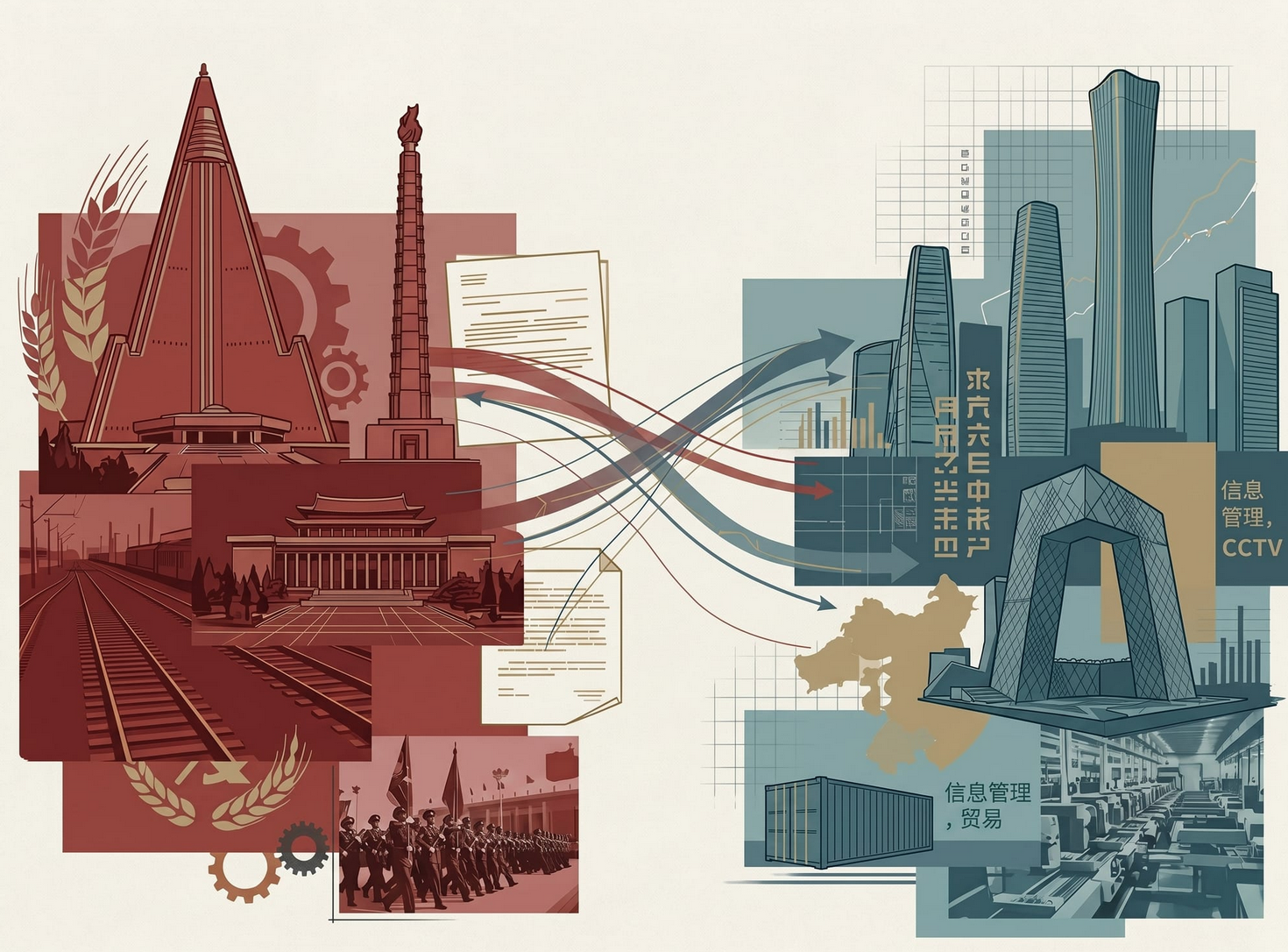
In the carefully choreographed theatre of Eurasian diplomacy, symbolism often speaks louder than policy. Recent signals from Pyongyang and Beijing suggest a quiet but deliberate recalibration of their relationship, shaped as much by historical necessity as by contemporary uncertainty surrounding Washington’s renewed assertiveness under Donald Trump.
At the surface, the rhetoric remains familiar: mutual respect, strategic partnership, and a shared language of sovereignty. Yet beneath this diplomatic choreography lies a more pragmatic alignment. For Kim Jong-un, economic isolation and sanctions fatigue continue to narrow the regime’s options. For Xi Jinping, regional stability remains inseparable from the management of an increasingly volatile global order.
What distinguishes the current moment is not ideological convergence, but strategic convenience. North Korea offers China a buffer of controlled unpredictability on its northeastern frontier, while China remains Pyongyang’s indispensable economic lifeline. Trade flows, energy support, and discreet logistical networks continue to bind the two states together, even as official narratives emphasise independence.
Washington’s posture, meanwhile, has reintroduced a familiar sense of geopolitical tension. The Trump administration’s return to a more transactional foreign policy has revived questions in both Beijing and Pyongyang about long-term predictability in US engagement. For regional actors, volatility in American diplomacy often translates into opportunity elsewhere.
Yet the relationship between China and North Korea is far from frictionless. Beijing remains wary of escalation on the Korean Peninsula, particularly any nuclear developments that could provoke regional militarisation in Japan and South Korea. Pyongyang, for its part, resists overdependence on any single patron, maintaining a carefully calibrated strategy of autonomy through leverage.
What emerges is less an alliance than an arrangement: fluid, asymmetrical, and continuously renegotiated. It is a reminder that in East Asian geopolitics, alignment is rarely absolute. Instead, it is shaped by shifting calculations of risk, survival, and influence.
In this evolving landscape, ideology matters less than endurance. And endurance, for now, defines the relationship between Beijing and Pyongyang.
Away from the noise.
Only the content that interests you, away from the noise and calm. Subscribe to our curated newsletter.